
How to Tell When Your Natural Stone Needs Professional Restoration
May 9, 2026
Maintenance: What Each Finish Hides and What It Shows
This is where the two finishes really pull apart in daily life. It’s also the piece homeowners tend to underestimate before they’ve lived with a floor or counter for a year.
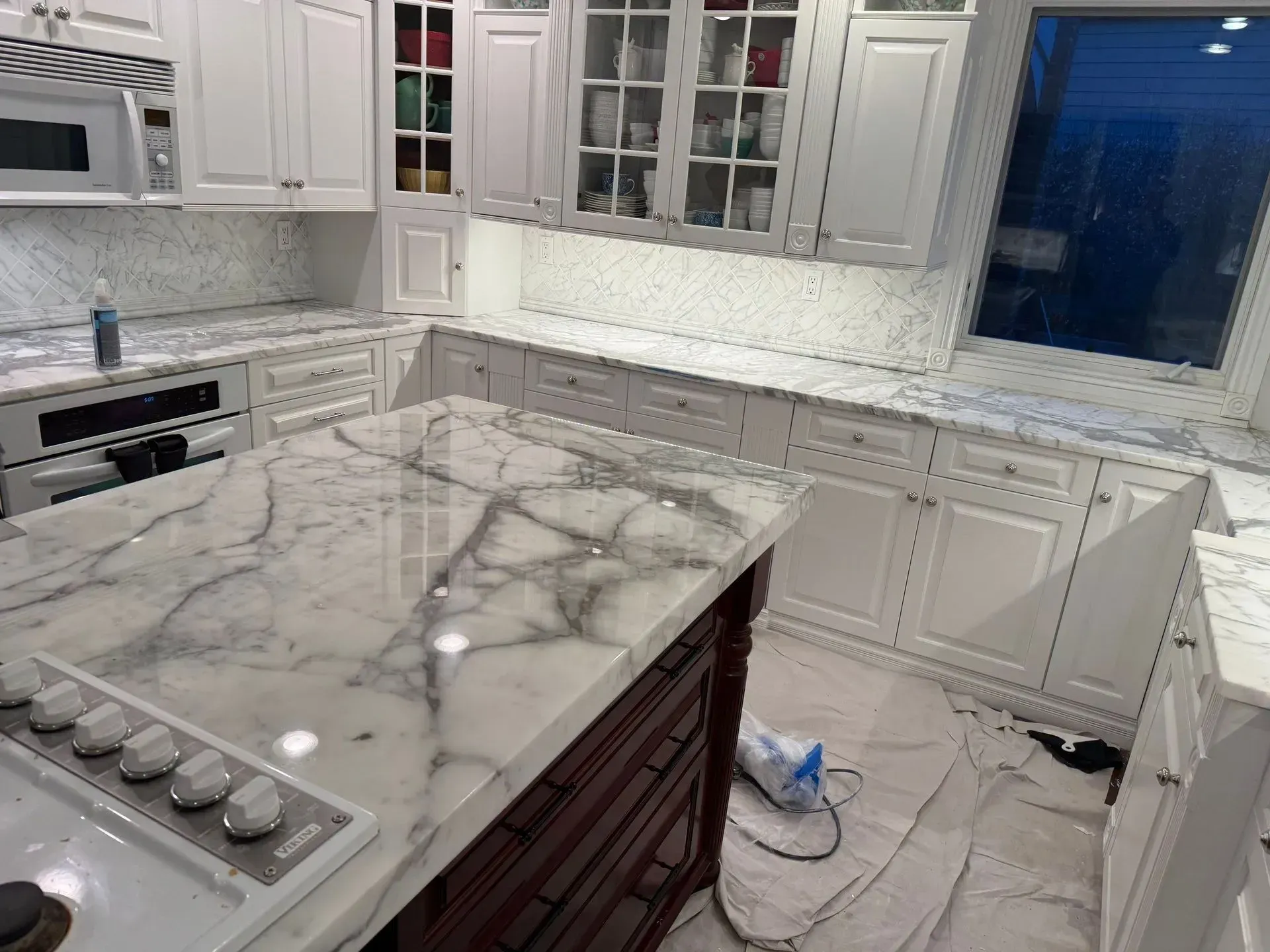
Polished surfaces show every mark. Scratches, water spots, dust film, and etching from acidic spills all interrupt that mirror shine, so a polished countertop or floor announces even small damage almost right away. On acid-sensitive stones like marble, limestone, and travertine, an etch mark from lemon juice or wine reads as an obvious cloudy patch precisely because there’s a reflective surface for it to disrupt.
Honed surfaces mask that same wear far more effectively. No mirror shine means scratches, footprints, and light etching tend to blend into the finish instead of standing out against it. This is why honing is such a common fix for marble that’s already etched. Grinding the surface down to a fresh, even hone doesn’t just remove the damaged layer — it also leaves a finish that hides the next round of wear better than a polish would.
Both finishes still need sealing, and it matters more right after a honing job specifically. A penetrating sealer fills the stone’s pores to slow staining, and that protection has nothing to do with which finish sits on top. But honing exposes a fresh layer of stone. Skip sealing right after, and that newly opened surface is more vulnerable to soaking up spills than it was before the work even started.
pH-neutral cleaning applies to both finishes, though polished stone forgives a wrong product less easily. Acidic or abrasive cleaners can etch or scratch either surface, but the damage shows up more clearly on a polish — one more reason kitchens that see a lot of acidic spills often do better honed.
TIP: Repolishing and rehoning are not permanent, one-time decisions. High-use kitchen counters and foyers often need repolishing every one to three years, while honed surfaces in busy kitchens or commercial spaces typically go one to two years between honing services, with lower-traffic rooms stretching to three to five years. If you are not sure which schedule fits your stone, a professional evaluation based on your actual foot traffic beats guessing.
Reduced Property Value
DIY cleaning appears cost-effective initially, but repeated mistakes accumulate repair costs over time. Surface damage, staining, and sealant loss often require professional correction, making long-term expenses significantly higher than preventive maintenance approaches used by trained stone care specialists in residential environments especially when improper techniques are repeatedly applied over extended periods.
Dedicated Stone Restoration Professionals Ensuring Surface Longevity
Well-maintained stone enhances property value, while damaged or dull surfaces reduce visual appeal. Potential buyers often view stone condition as a reflection of overall home maintenance standards, influencing final purchase decisions and negotiation strength during real estate transactions in competitive housing markets especially in urban property listings across Denver neighborhoods today.
Professional Stone Care
While daily maintenance is essential, professional stone care ensures longevity and preserves aesthetic appeal. Services such as deep cleaning, polishing, sealing, and crack repair are crucial for high-end stone surfaces or large installations.
Frequent Repair and Replacement Cycles
Improper care shortens the lifespan of stone installations. Instead of lasting decades, surfaces may require early replacement due to preventable damage, increasing overall ownership costs and reducing long-term durability across residential and commercial properties affected by consistent maintenance errors especially when maintenance routines are inconsistently followed over multiple years locally experienced.
Long-Term Consequences of Incorrect Assumptions
Misunderstanding stone type and finish leads to repeated damage cycles. Over time, restoration becomes more complex, often requiring grinding, resurfacing, or complete replacement. What begins as a simple cleaning task gradually turns into a high-cost repair problem affecting structural stability and long-term surface performance across residential properties through continuous exposure conditions.
Professional Restoration vs Preventive Care Costs
Preventive professional maintenance is significantly more affordable than restoration work. Once damage occurs, services such as honing, polishing, or resurfacing become necessary, increasing total ownership costs and requiring specialized intervention to restore stone surfaces to original condition across various residential applications especially after significant surface deterioration has occurred in most cases.
Natural stone surfaces begin to lose their original elegance; early warning signs often go unnoticed until damage becomes more difficult and costly to correct. Materials like marble, granite, limestone, and travertine are widely used in residential and commercial spaces because of their durability and timeless appeal. However, even the strongest stone is vulnerable to wear caused by foot traffic, moisture exposure, improper cleaning methods, and everyday use. Understanding when natural stone requires professional restoration is essential for preserving both appearance and structural integrity. Recognizing these changes early helps maintain long-term value and ensures surfaces continue to perform as intended.
Professional restoration goes beyond standard cleaning by addressing deep-set issues such as etching, grout deterioration, and loss of polish. Surface restoration techniques help revive natural stone without compromising its structure. Identifying the right time for intervention can prevent expensive replacements and extend the life of installed stone. This guide explains key signs that indicate restoration is needed and helps property owners make informed decisions before damage becomes irreversible. Early evaluation ensures long-term durability and consistent surface performance outcomes, overall longevity benefits.
Visible Surface Wear and Loss of Shine Indicators
Dullness, Etching, and Uneven Finish Patterns
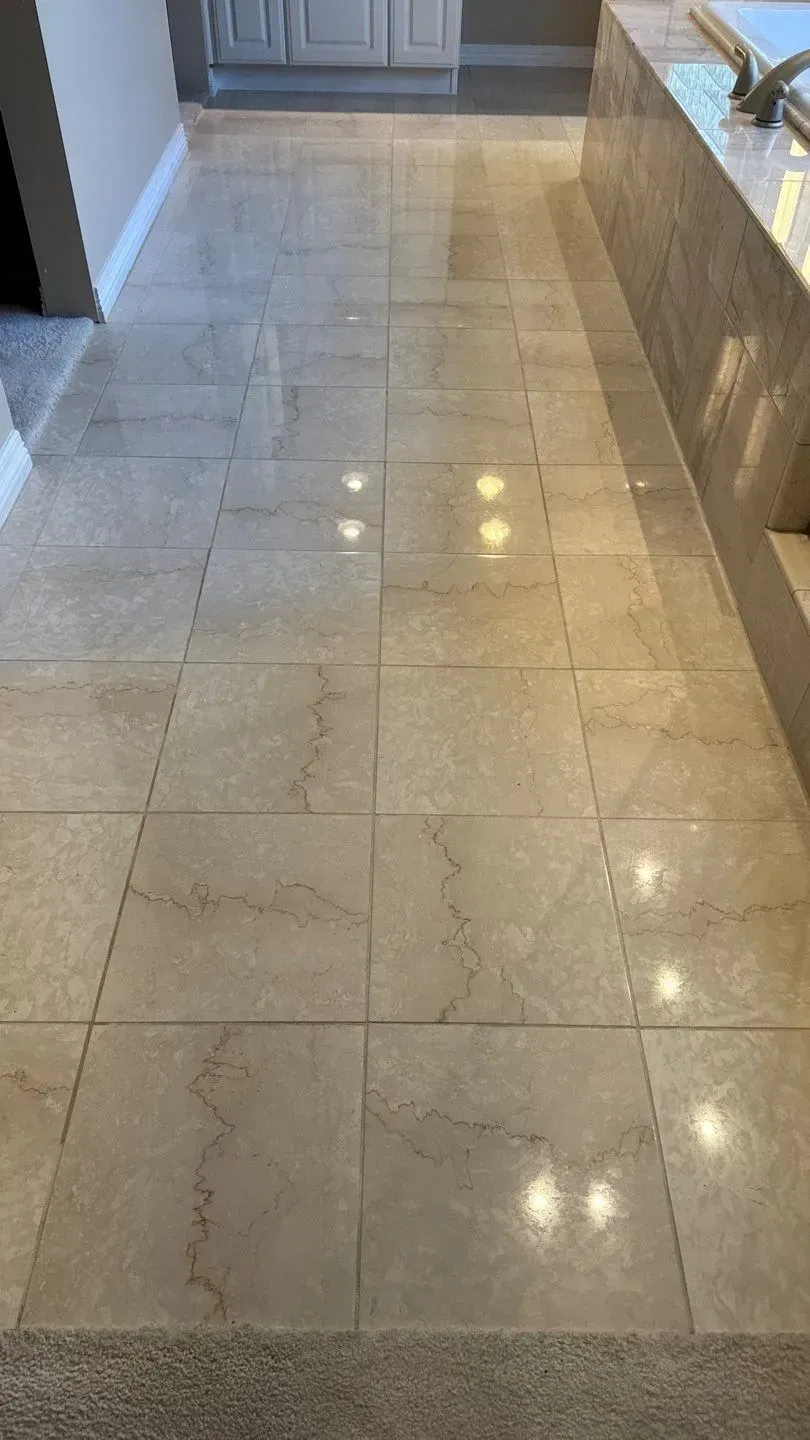
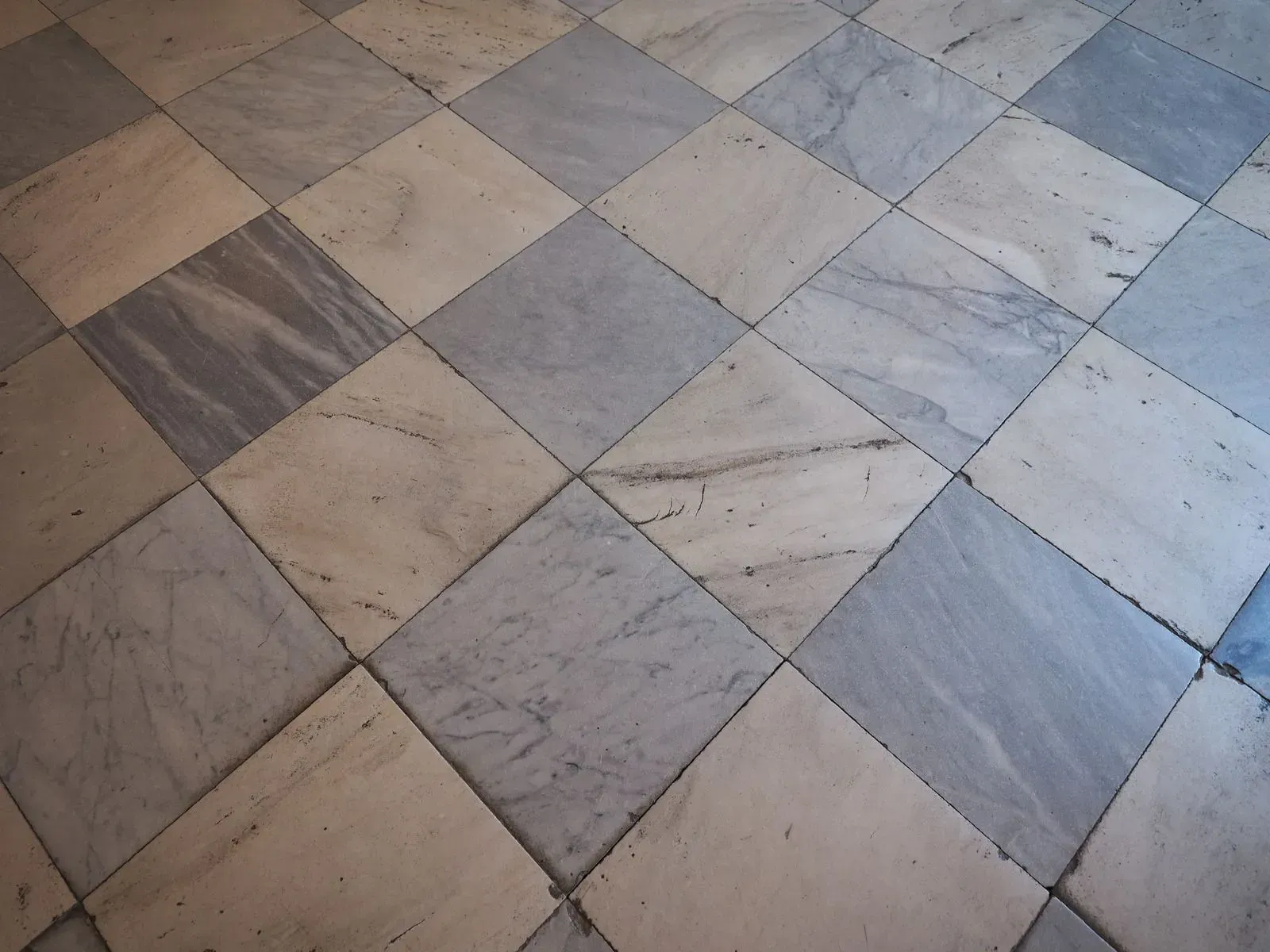
Natural stone surfaces are designed to maintain a refined finish, yet daily exposure gradually reduces their visual clarity. One of the earliest indicators of deterioration is a noticeable loss of shine. When light reflection becomes inconsistent across the surface, it often signals micro-abrasions or chemical etching. These imperfections cannot be corrected through routine cleaning alone. Acidic spills, harsh cleaners, and abrasive tools accelerate this condition, leaving behind dull patches that disrupt the uniform appearance of the stone.
Etching is especially common on marble and limestone, where calcium-based structures react easily with acids. Even minor spills can create permanent marks that spread over time. Another sign includes uneven gloss levels, where certain areas appear polished while others look faded or cloudy. This imbalance indicates that surface sealing or polishing layers have degraded.
When Routine Cleaning No Longer Restores Appearance
We often see that routine mopping or neutral pH cleaning solutions fail to restore original clarity once surface wear has progressed beyond the top layer. This is a strong indicator that restoration services are required. When stone begins to absorb moisture unevenly or develops a hazy film after cleaning, internal porosity changes may already be present. At this stage, surface polishing alone is not sufficient, and mechanical restoration becomes necessary to rebuild the finish from within.
Early detection of these visual and performance changes ensures timely intervention and prevents costly replacement of natural stone surfaces. Regular inspection under natural and artificial lighting helps identify subtle inconsistencies that are often missed during daily use. Reflective testing, touch assessment, and water droplet observation can reveal surface integrity issues that signal the need for professional evaluation. Addressing these early signs helps maintain structural strength and aesthetic quality while reducing long-term maintenance costs.
Structural Damage and Hidden Subsurface Issues
Cracks, Chipping, and Edge Weakening
Structural deterioration in natural stone often begins beneath the surface, making early detection more challenging. Hairline cracks, minor chipping, and weakened edges are key indicators that restoration is required. These issues typically develop due to heavy load pressure, foundation movement, or prolonged exposure to moisture. Once cracks form, they tend to expand over time as stress continues to affect the stone matrix.
Edge deterioration is another important warning sign. When corners of stone tiles or slabs begin to crumble or lose definition, it suggests internal bonding has weakened. This condition is common in high-traffic areas such as hallways, entryways, and commercial floors where repeated impact accelerates wear.
Ignoring these structural signs can lead to complete material failure, requiring replacement rather than restoration. Professional restoration techniques involve resin filling, structural stabilization, and precision grinding to restore integrity without compromising original material composition. Early intervention helps preserve both safety and appearance while reducing long-term repair costs.
Moisture Intrusion and Subsurface Weakening
Moisture infiltration is a critical factor in stone degradation, especially in porous materials like limestone and travertine. When water penetrates beneath the surface, it can weaken bonding agents and cause internal expansion during temperature fluctuations. This leads to hidden instability that may not be visible until significant damage has occurred. Signs such as damp patches, efflorescence, or slight surface movement indicate deeper structural concerns.
Restoration Triggers and Professional Evaluation
Once structural issues are suspected, professional evaluation becomes essential to determine the extent of damage and appropriate restoration method. Advanced diagnostic tools help assess internal weaknesses that cannot be identified visually. Restoration triggers often include spreading cracks, recurring surface damage, and instability under pressure. Addressing these conditions early ensures structural safety and prevents escalation into full replacement scenarios.
Timely restoration decisions preserve both durability and aesthetic value of natural stone installations. These measures reduce long-term maintenance burdens and structural risks across high-use environments ensuring consistent performance and safety outcomes over time.
Functional Performance Issues in Daily Use
Slippery Surfaces, Water Absorption, and Staining
When natural stone begins to lose functional performance, daily usability becomes compromised. One of the most noticeable issues is increased slipperiness, often caused by worn finishes or improper cleaning residues. This condition presents a safety risk in both residential and commercial environments, especially in kitchens, bathrooms, and entryways.
Water absorption is another key indicator. When stone no longer repels moisture effectively, it suggests that sealing layers have degraded. This allows liquids to penetrate deeper, resulting in stubborn stains and discoloration. Staining becomes more difficult to remove over time and may indicate that surface pores are no longer protected.
We often recommend testing by placing a small water droplet on the surface. If absorption occurs quickly, restoration or resealing is likely required. These performance issues should not be ignored, as they directly impact both safety and long-term durability.
Loss of Sealant Protection and Surface Responsiveness
A compromised sealant layer significantly reduces stone protection against daily wear. When sealants break down, stone surfaces lose resistance to oils, spills, and environmental exposure. This leads to rapid aging and increased maintenance demands. Surface responsiveness, such as how quickly liquids absorb or how easily stains form, becomes a key diagnostic factor in determining restoration needs.
Long-Term Maintenance Implications
Neglecting functional performance issues often results in higher restoration costs over time. As stone continues to degrade, more intensive polishing, resurfacing, or structural repair becomes necessary. Early intervention reduces downtime and preserves original material integrity. Monitoring performance changes ensures long-term usability and consistent visual appeal across all installed surfaces. Consistent evaluation of surface behavior ensures optimal performance and reduces long-term repair requirements in both residential and commercial settings supporting safer and more durable outcomes over extended service life.
When DIY Cleaning Fails and Professional Restoration Becomes Necessary
Limitations of Household Cleaning Methods
Many natural stone owners attempt to resolve visible issues using household cleaning products, but these solutions often fail to address deeper surface damage. Standard cleaners are not designed to repair etching, restore polish, or correct structural wear. In some cases, improper chemical use can worsen the condition by stripping protective sealants or causing additional surface dulling.
DIY methods also lack the precision required for restoration-grade results. Without specialized equipment such as diamond abrasives and honing tools, surface inconsistencies remain unresolved. This creates a cycle where repeated cleaning produces minimal improvement while damage continues to progress.
Signs Professional Intervention Is Required
Certain indicators clearly show when restoration services are necessary. Persistent dullness despite cleaning, visible cracks expanding over time, and recurring stains are strong signals that surface-level maintenance is no longer sufficient. Additionally, if stone feels uneven underfoot or shows changes in texture, internal degradation may already be present. At this stage, professional restoration ensures proper correction and prevents further deterioration.
Benefits of Professional Stone Restoration
Professional restoration delivers results that extend beyond surface appearance. Advanced honing and polishing techniques restore original clarity while strengthening surface resilience. Restoration also improves stain resistance, enhances safety by reducing slip risk, and extends the lifespan of installed stone. These benefits contribute to long-term cost savings and improved property value.
Engaging professional support ensures that natural stone surfaces regain both aesthetic appeal and structural integrity. Proper assessment identifies underlying issues that are not visible at the surface level, allowing targeted restoration strategies. This approach minimizes disruption while maximizing performance outcomes across all stone installations in residential and commercial environments. Consistent care and timely intervention preserve long-term durability and visual quality. We emphasize preventive maintenance and expert restoration guidance for lasting results, ensuring optimal performance across all natural stone surfaces over time.
Dedicated Stone Restoration Professionals Ensuring Surface Longevity
Natural stone surfaces require ongoing attention to maintain both visual appeal and structural integrity. Early identification of wear indicators such as dullness, etching, cracks, and moisture absorption helps prevent irreversible damage. Functional issues like slipperiness, staining, and loss of sealant protection further confirm the need for restoration rather than routine cleaning. Structural concerns beneath the surface often develop silently, making regular inspection essential for long-term preservation. Addressing issues at the right time ensures durability, safety, and cost efficiency across residential and commercial environments.
Colorado Stone & Tile Care
represents a trusted authority in natural stone restoration across Denver, CO, with over 15
years of dedicated experience in delivering
high-quality surface care solutions. Our approach focuses on restoring marble, granite, limestone, and other natural stone materials to their original elegance while ensuring long-term durability. We emphasize precision techniques that address deep surface imperfections, structural weaknesses, and aesthetic degradation without compromising the integrity of installed stone. Every project is approached with a commitment to detail, ensuring that both residential and commercial spaces benefit from renewed surface performance and improved visual clarity.