Why Marble Countertops Etch So Easily in Denver Kitchens?
July 9, 2026
Quick Answer: Marble countertops etch so easily because marble is made largely of calcium carbonate, and calcium carbonate reacts chemically with acid. When something acidic like lemon juice, wine, vinegar, or coffee touches the surface, it dissolves a microscopic layer of the stone and leaves a dull, chalky mark. This is etching, and it is physical damage to the stone itself, not a stain sitting on top. A kitchen is full of these acids, and a polished finish shows every mark, which is why marble etches faster there than almost anywhere else. Sealing does not stop it, because etching is a surface reaction rather than absorption, but honing and proper care can manage it.
You set a glass of lemon water on the new marble island, answered a text, and came back to find a dull ring where the glass had been. Or you wiped up a splash of red wine after dinner and the stone underneath looked cloudy, like a ghost of the spill that will not buff away. The counter was flawless a week ago. Now it has these soft, matte spots that catch the light wrong, and no amount of cleaning brings the shine back.
That is etching, and if you own marble in a Denver kitchen, you are going to meet it. The frustrating part is that you did nothing careless. Marble etches from ordinary food and drink because of what the stone is made of, not because of anything you did wrong. Once you understand the chemistry underneath those dull marks, the whole thing makes sense, and so does what actually protects the surface. Here is why marble is so prone to etching, why the kitchen is the worst place for it, and what actually helps.
It Is Chemistry, Not Cleaning
The first thing to understand is that an etch mark is not dirt, not a stain, and not a cleaning failure. It is a chemical reaction that removed a thin layer of the stone.
Etching is what happens when acid meets the calcium carbonate that marble is built from. The acid reacts with the stone and dissolves a microscopic amount of the surface, and that tiny divot of missing, roughened material is what you see as a dull or chalky spot. The reaction is fast and it is done almost the instant the acid lands. You are not looking at something on the marble; you are looking at a place where a little bit of marble is now gone.
This is why an etch is so different from a stain. A stain is a substance that soaked into the stone and can often be drawn back out. An etch is damage to the stone itself, a change in its texture and how it reflects light, and no cleaner can scrub away a spot where the surface has been chemically eaten. Telling the two apart matters, because they call for completely different fixes, and reaching for stronger cleaners on an etch only wastes effort on a problem cleaning cannot touch.
Why Marble Specifically: the Calcium Carbonate Problem
Plenty of countertop materials shrug off a splash of lemon juice. Marble cannot, and the reason is in its geology.
Marble is metamorphosed limestone, which means it is composed largely of calcite, the mineral form of calcium carbonate. Calcium carbonate happens to be highly reactive with acids, so the very material that gives marble its luminous depth and soft veining is also the material that acid attacks. The same is true of its cousins, limestone and travertine, which are also calcium carbonate stones and etch for the same reason. It is a package deal: the stone that looks like that etches like that.
Marble is also relatively soft as stone goes, which compounds the problem. A softer surface shows the roughening from an etch more readily and scratches more easily on top of it. So marble carries two vulnerabilities at once, a chemistry that reacts with common acids and a softness that makes the resulting mark easy to see. That combination is why a material prized in the finest kitchens is also one of the fussiest to keep flawless.
The Kitchen Is the Worst Room for Marble
If you wanted to design a room to torment marble, you would build a kitchen. It is where acid and marble meet all day long.
Look at what passes across a kitchen counter: lemon and lime, vinegar and salad dressing, wine, tomato sauce, coffee, citrus juice, soda, and even some general-purpose or “natural” cleaners that are mildly acidic. Every one of those is capable of etching marble, and many do it on contact. A drop of lemon juice left for a few seconds can leave its mark. This is not about heavy spills or neglect; it is the normal traffic of cooking and entertaining, which in a lot of Front Range homes means a marble island that sees guests, glasses, and cutting boards several nights a week.
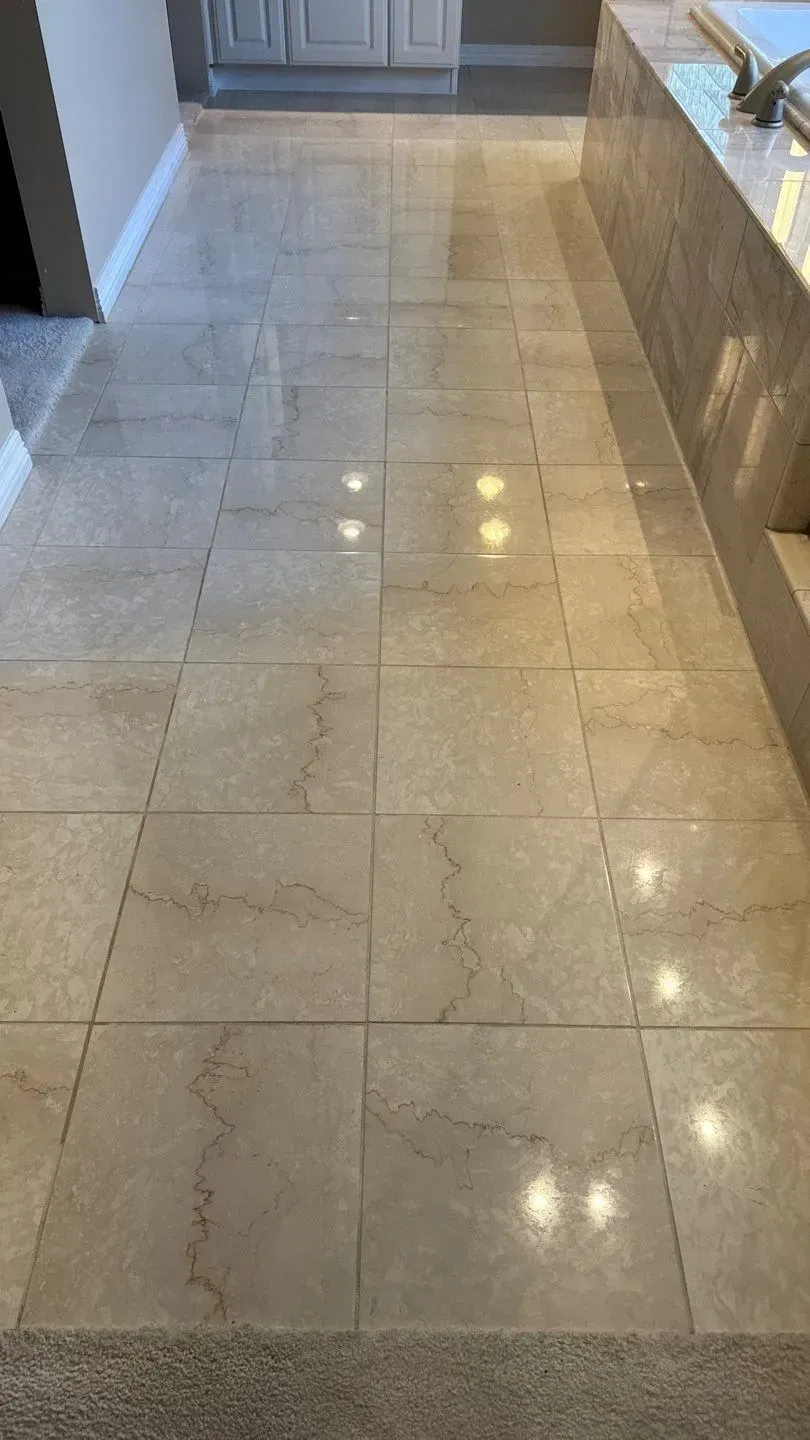
The finish makes it more visible, too. A high polish is a mirror, and any etch interrupts that mirror with a dull patch that stands out sharply. On a polished marble counter, the same small reaction that would barely register on a matte surface reads as an obvious cloudy spot. So the kitchen combines the most acids, the most frequent contact, and often the most reflective finish, which is exactly the recipe for marble that seems to etch if you so much as look at it wrong.
TIP: Keep a stone-safe, pH-neutral cleaner at the counter and skip anything labeled for cutting through grease, lime, or hard water, since those are often acidic enough to etch marble themselves. Wipe acidic spills the moment they happen rather than letting them sit, and use trivets, boards, and coasters under anything acidic. None of this makes marble bulletproof, but it sharply cuts how often you introduce acid to the surface.
The Denver Wrinkle: Is It Etching or Water Spotting?
Around the Front Range, marble owners run into a second kind of dull mark that gets confused with etching, and telling them apart saves a lot of frustration.
Colorado’s water tends to be hard, carrying dissolved minerals that leave deposits behind as water evaporates. On a marble counter, that can show up as dull, cloudy water spots or a filmy haze, especially where a glass sweats or water pools around a faucet. These look a lot like etch marks but come from mineral scale sitting on the surface rather than acid eating into it. Some of that hard-water dullness can be cleaned or buffed away, while a true acid etch cannot, which is why it is worth knowing which one you are dealing with. In the dry, high-altitude air here, water also evaporates quickly, so those mineral deposits can set in and build up before you notice.
The practical upshot is that a marble counter in a Denver kitchen can pick up dull spots from two directions at once: acid etching from food and drink, and mineral haze from hard water. They can even overlap, which makes a professional read useful when a surface has gone generally dull and you cannot tell how much is chemistry and how much is scale.
WARNING: Do not attempt to fix etching with acidic cleaners, abrasive powders, or DIY polishing kits on marble. Acidic products deepen the very reaction that caused the etch, and consumer polishing kits often leave uneven patches, swirl marks, or fresh scratches on soft stone, turning a small dull spot into a larger repair. Marble is one of the easiest stones to make worse with the wrong product.
Why Sealing Does Not Stop It, and What Actually Helps
Here is the part that surprises most marble owners: sealing your counter, which everyone recommends, does almost nothing against etching.
A penetrating sealer works by filling the stone’s pores so liquids cannot soak in and stain. That is real protection against staining, and marble should be sealed for exactly that reason. But etching is not absorption. It is a reaction that happens right at the surface, on top of where the sealer lives, so acid still touches the calcium carbonate and still etches it whether the stone is sealed or not. Believing a standard sealer stops etching is how a lot of homeowners get caught off guard by their first dull spot.
What actually helps runs along two tracks. The first is limiting acid contact through daily habits, the pH-neutral cleaner, the quick wipe, the coasters and boards. The second is the finish itself. A honed, matte finish does not prevent etching, but it hides it dramatically, because there is no mirror shine for a dull spot to interrupt, which is why honing is a popular choice for marble that has to live in a working kitchen. When etching has already dulled a polished surface, professional honing and refinishing can grind past the damaged layer and restore an even finish, removing the marks rather than masking them. There are also specialized anti-etch treatments that go beyond what an ordinary sealer does, and choosing the right approach for your stone and how you use it is where professional guidance pays off.
Frequently Asked Questions
Is etching the same as staining on marble?
No. Stains soak into marble's pores, while etching is surface damage caused by acid dissolving the stone. Stains may respond to cleaning, but etching requires professional honing or refinishing because the damaged surface must be physically restored for appearance.
Does sealing my marble prevent etching?
No. Sealers help resist stains by reducing absorption but cannot stop acids from reacting with marble's surface. Citrus, vinegar, and similar products still cause etching, making careful daily use and professional refinishing more important than sealing alone for protection.
What foods and drinks etch marble the fastest?
Acidic foods and drinks etch marble quickly, including lemon juice, vinegar, wine, tomatoes, coffee, soda, and many household cleaners. Even brief contact can dull polished surfaces, making prompt cleanup and pH-neutral stone cleaners essential for protecting the finish long-term.
Can etching be removed, or is the counter ruined?
Etching usually can be removed through professional honing and refinishing. Because the damage affects only the surface, technicians restore an even appearance by removing the etched layer. Most marble countertops remain structurally sound and never require replacement after ordinary etching damage.
Why does my marble look duller in some spots and not others?
Dull spots usually develop where acidic spills or hard-water deposits repeatedly contact the marble. Areas near sinks, drink preparation, or food handling experience greater wear, while untouched sections retain their original polish until refinishing restores consistent appearance across the entire surface.
Would granite or quartz have been a better choice for my kitchen?
Granite and quartz resist acids better than marble, making them lower-maintenance choices. However, marble remains popular for its timeless appearance. Many homeowners simply maintain it properly and refinish occasional etching, preserving its unique beauty without sacrificing long-term performance or value.
Living With Marble the Smart Way
Marble etches so easily because its beauty and its sensitivity are the same thing: a calcium carbonate stone that acid reacts with on contact, set down in a kitchen full of acids and finished to a shine that shows every mark. None of that means marble was the wrong choice. It means the counter needs care that fits its chemistry, a light hand with acids, the right cleaner, an honest read on etching versus water spotting, and professional refinishing when the surface has gone dull. Understand what is happening at the surface, and those dull marks stop being a mystery and start being something you can manage and reverse.
Restore the etched, dull spots on your marble and keep them from taking over — When acid has left cloudy marks that cleaning cannot touch, the fix is professional honing and refinishing that grinds past the etched layer and brings the finish back even, not a stronger cleaner that only makes it worse. With over 15
years of experience, Colorado Stone & Tile Care
evaluates whether your marble is etched, water-spotted, or both, refinishes the surface to the sheen you want, and recommends the finish and protection that best suit kitchens throughout Denver, CO. Reach out for an on-site evaluation before the etching spreads across the whole counter.